
By James Rountree | August 25, 2025
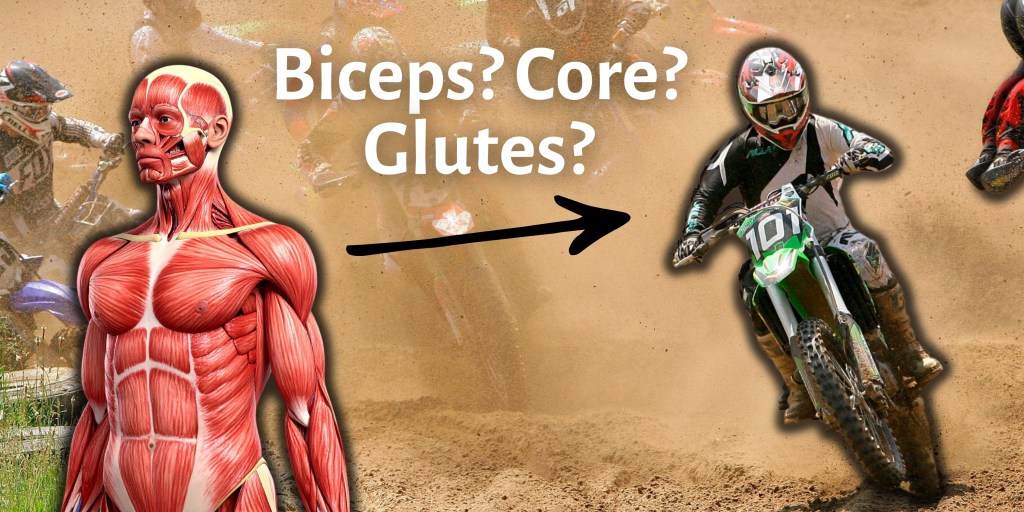
Motocross isn’t just about twisting the throttle. But you already know this. When you finish a moto on a rough track in blistering heat, your arms feel dead, your legs are tired, and you’re catching your breath. It’s one of the most physically demanding sports in the world, testing strength, endurance, balance, and mental focus. But what muscles do motocross riders really use the most?
Let’s break it down.
1. Forearms and Grip Strength
If there’s one area riders complain about most, it’s the forearms. Arm pump can ruin your moto, and it usually comes from a mix of weak grip endurance and poor blood flow.
- Muscles involved: forearm flexors and extensors
- Why it matters: You need to hold on! If you get arm pump, you lack control of the throttle, clutch, and front brake.
Training Tips:
- In the gym, perform exercises like pull-ups and inverted rows, and lift heavy weights without using wrist straps (although some wrist strap usage is beneficial).
- Include cardio exercises that utilise grip strength, such as rowing.
- Warm up before you ride to improve blood flow.

2. Shoulders and Upper Back
Your forearms and hands are the final point of contact with the handlebars, but if you engage your back and shoulders well, you can maintain posture and take a lot of the load of holding on. Your shoulders, traps, lats and rhomboids (upper back) are the major upper body muscles that allow you to maintain posture, balance, and direction on the bike.
Training Tips:
- In the gym, perform exercises like shoulder press, reverse flys, lateral raises, pull-ups, and bent over rows.
- Include cardio exercises that utilise your back and shoulders, like rowing, ski erg, assault bike, or swimming.
- Do mobility often to prevent tight back and shoulders

3. Core and Lower Back
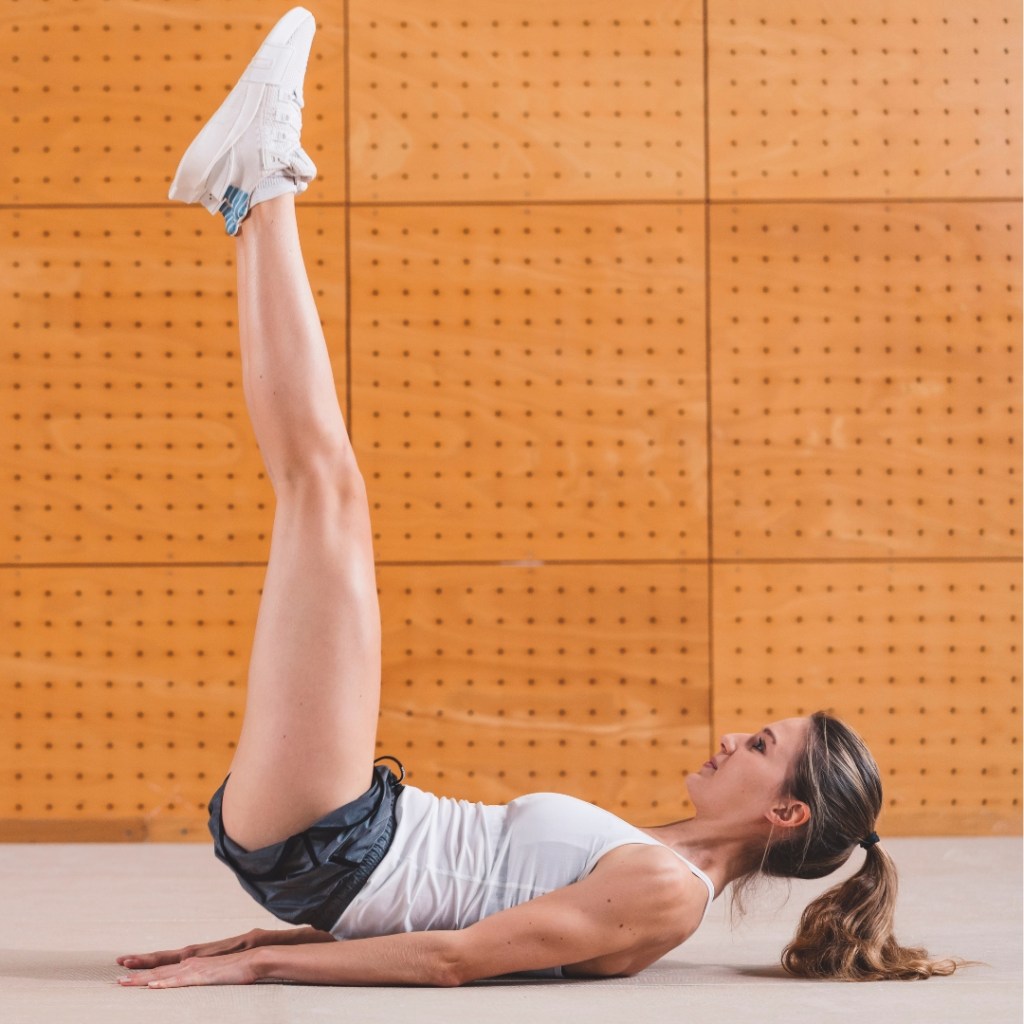
Your core and lower back are important for maintaining posture and control through your hips. Every bump, jump, and braking force runs through your hips, so weakness here means fatigue, poor posture, less control, plus increased risk of back pain. Having strong hip flexors allows you to keep your inside leg high in the corners for the entire moto (no more sloppy leg drag!).
- Muscles involved: abdominals, obliques, erector spinae
- Why it matters: bike control, balance, shock absorption
Training Tips:
- In the gym, perform exercises like leg raises, cable core rotations, side planks, seated hip flexion, and key compound exercises, such as squats, deadlifts, and other full-body movements.
- Do hip-focused mobility often to prevent a tight lower back.
4. Legs and Glutes
Rough motocross tracks force you to stand most of the time — it’s a constant squat, grip, and brace game. Strong legs keep you planted and in control when attacking the track.
- Muscles involved: quadriceps, hamstrings, glutes, adductors, abductors, calves
- Why it matters: standing through braking bumps and rollers, absorbing landings, and weighting the outside peg in corners
Training Tips:
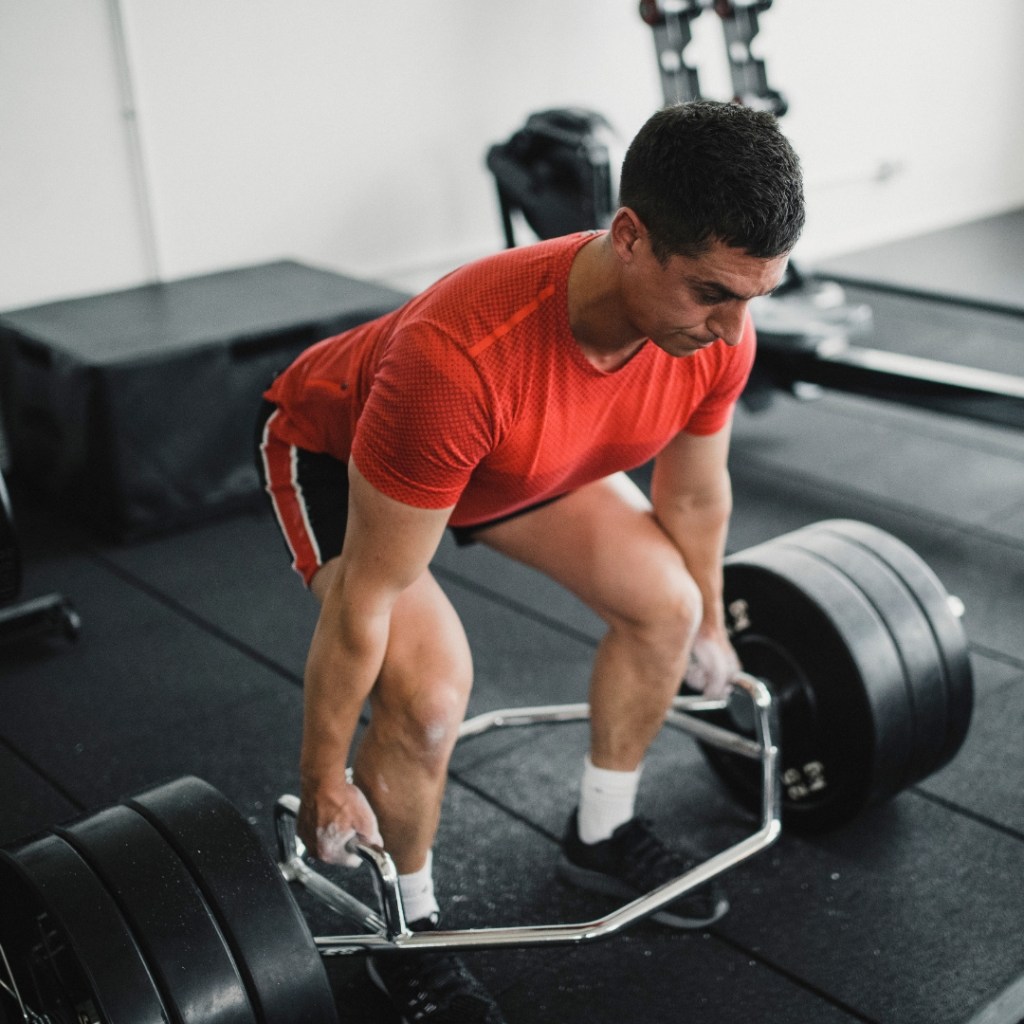
- In the gym, perform squats, lunges, hinging movements like romanian deadlifts, and adduction exercises like copenhagen planks.
- Include plyometrics to build muscle and tendon stiffness to absorb impact.
- Include isometrics for specific ‘bracing’ strength.
5. Cardio Engine: Heart and Lungs
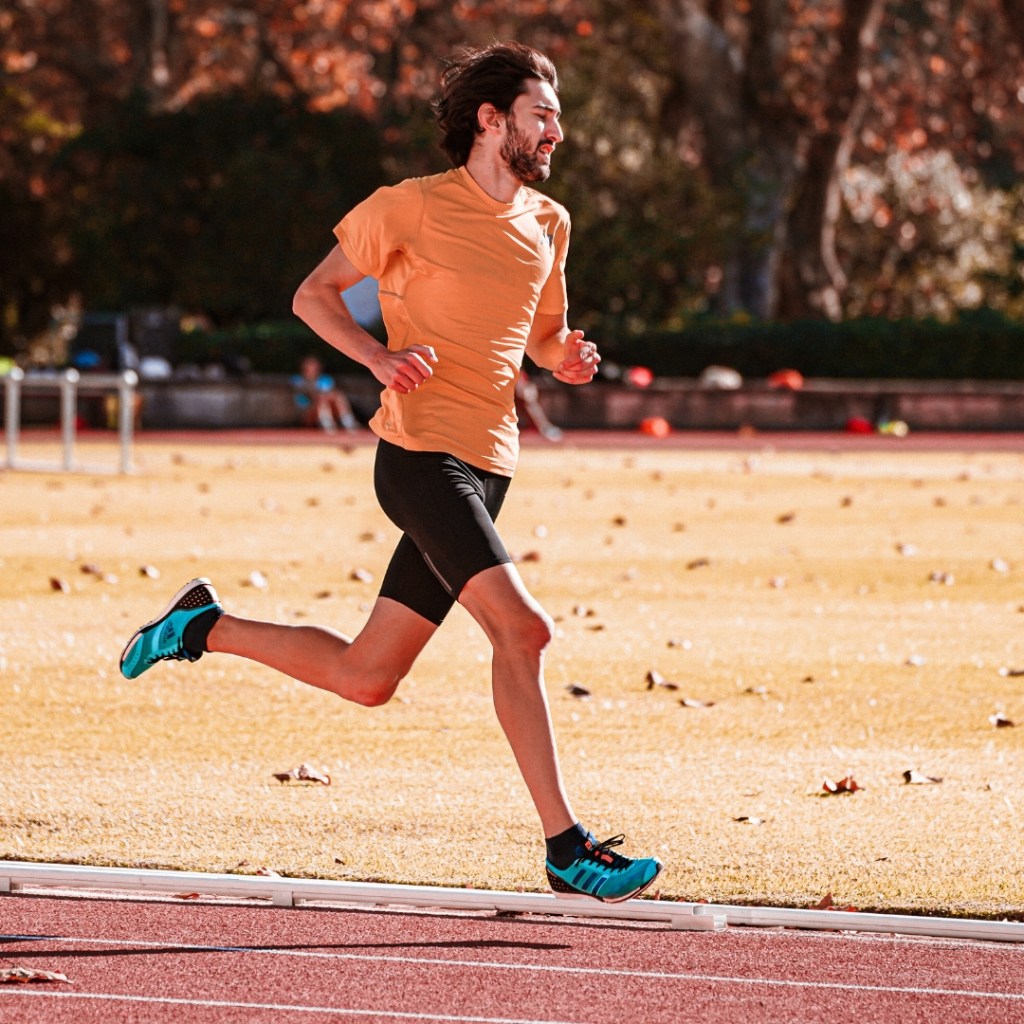
Not technically “muscles you see,” but your cardiovascular system might be the most important muscle group of all. A strong aerobic base with good high-intensity endurance, aka ‘lactate tolerance,’ keeps you from running out of steam mid-moto.
- Why it matters: endurance, recovery between motos, mental sharpness
Training Tips:
- Do 2-4 ‘hard’ cardio sessions per week (MX can count as a hard session).
- To build training volume, you can add lots of low intensity (zone 2) cardio more quickly & sustainably than high intensity cardio – but still progress both.
So What Is Most Important?
You’ll notice we mentioned almost all muscle groups in the body, so what muscle groups matter most? Well… motocross is a full-body sport, and you’re only as strong as your weakest link, so it’s important to hit every muscle group in some way, shape, or form every week. However, if I were to choose a muscle group that is most important for motocross, I would pick the calves, hamstrings, lower back, and upper back, otherwise known as the ‘posterior chain’ (oh, and the adductors to grip the bike).
Posterior Chain:
The posterior chain is crucial for maintaining the classic ‘attack position’ for an entire moto.
If you struggle with calf raises, Romanian deadlifts, and rows, I recommend focusing on strengthening these movements. Strength is never a weakness.

Seem like a lot?
If this seems like a lot of muscle groups to fit into one week or training (not to mention cardio training), no need to fear; we can help!
Email James@theriderscircle.co.nz for training enquiries.
Author: James Rountree
🎓 Master of Health, Sport, & Human Performance Science
🏁 10+ years racing experience in NZ & AUS
🚀 Passionate about helping fellow racers with their fitness journey

Leave a comment